Claude Certified Developer - Foundations
CCDV-F
The CCDV-F exam tests whether you can build and ship applications and agents on Claude: the Agent SDK, the API and client SDKs, Claude Code, prompting, evals, model selection, guardrails, tools and MCP servers. On preporato.com you prepare for the Claude Certified Developer Foundations exam with timed practice exams, an explanation for every question and flashcards.
458+
Questions
8
Pruebas de Práctica
22Pro
Projects
Lifetime
Updates
Qué Incluye
Practice
8 exam-realistic practice tests
A travel-booking backend proxies the Messages API behind its own REST layer. During a fare-sale traffic spike, upstream calls begin returning HTTP 429 with a retry-after header while other requests still succeed. What should the backend do with the failed requests?
Flashcards
Spaced-repetition decks
Spaced repetition
Hands-on
Projects· 22
Architect a Claude Agentic Loop with Safe Termination
OpenBuild a Hub-and-Spoke Multi-Agent System with Claude
OpenDesign Tools and an MCP Server for a Claude Agent
OpenBuild a Structured-Output Extraction & Review Pipeline with Claude
OpenBuild a Reliable, Long-Context Claude Agent with Crash Recovery
OpenBuild the Canonical Claude Agent Workflow Patterns
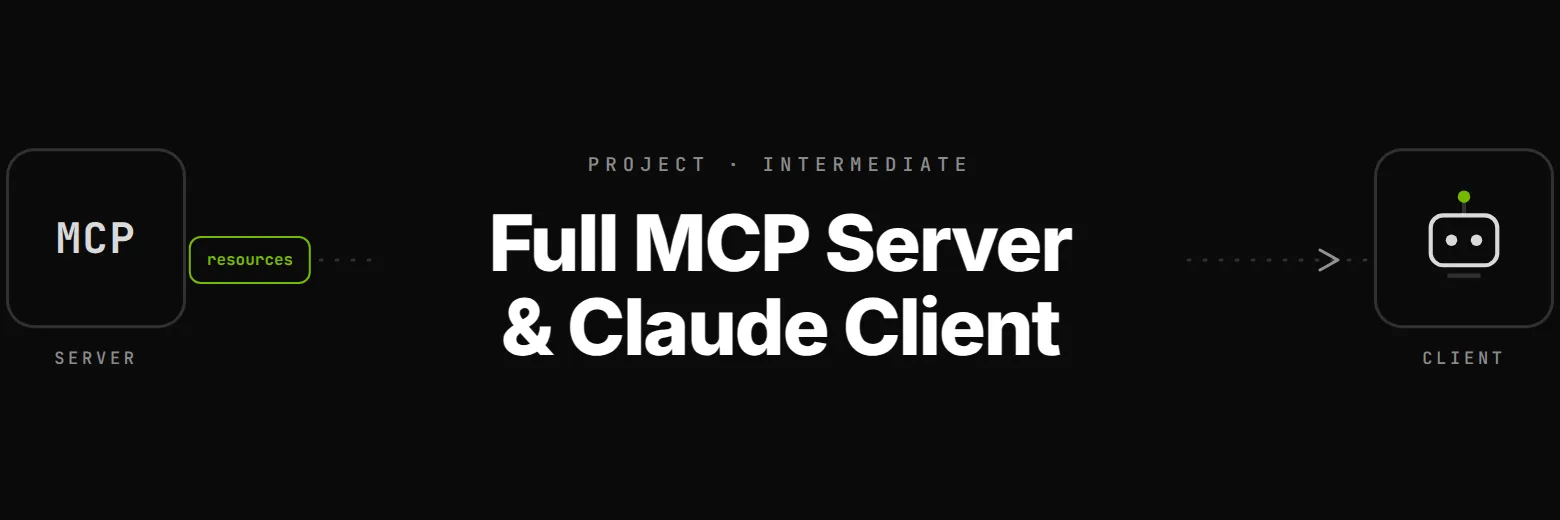
OpenBuild a Full MCP Server and Connect Claude as a Client
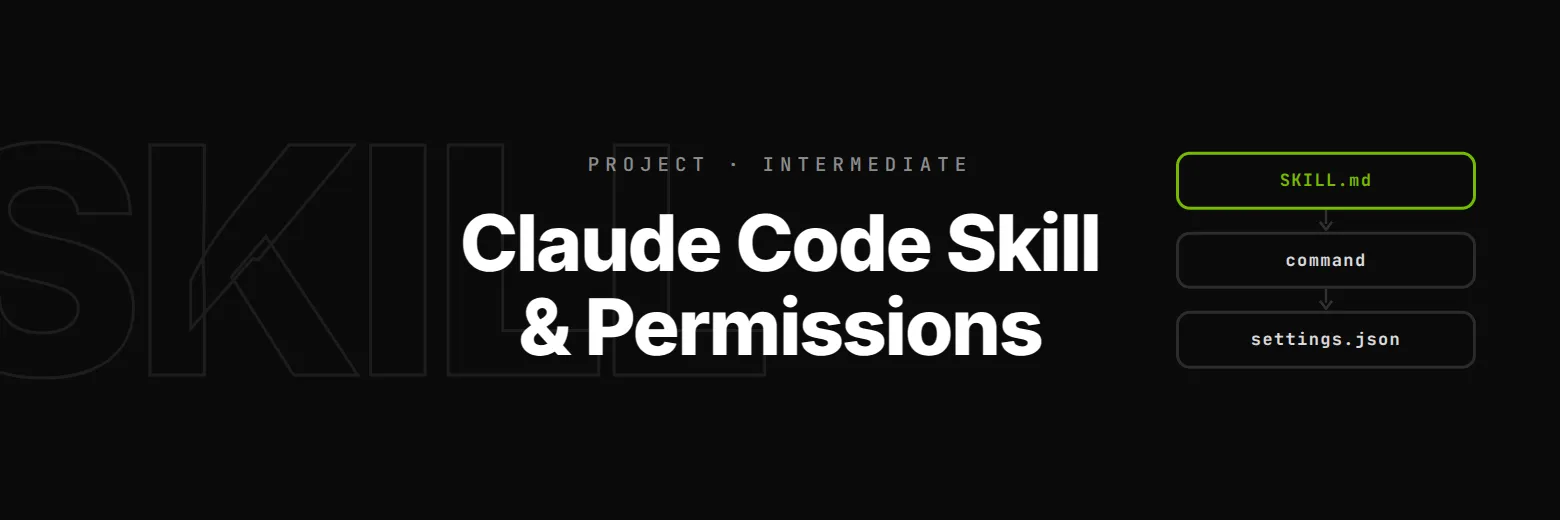
OpenBuild a Claude Code Skill, Command, and Permission Set
OpenBuild a Headless Claude Code Review Bot for CI
OpenEngineer a Claude Decision Prompt and Prove It with Eval
OpenManage Long-Running Claude Context with Compaction
OpenEngineer a Claude Code Project Config and CI Gate
OpenHarden Your .claude Directory: Permissions, a Skill, and a Hook That Fires
OpenEngineer an Extraction Prompt and Prove It on a Holdout Set with Headless Claude
OpenAuthor a CLAUDE.md Hierarchy That Actually Steers a Monorepo
OpenWire Two MCP Servers Into a Project: a stdio Vault and a Remote Endpoint
OpenOrchestrate a Scout and a Fixer: Subagents, Tool Scoping, and a Headless CI Sweep
OpenBuild a Working Agent with the Claude Agent SDK: Custom Tools, a Turn Budget, and Output You Can Trust
OpenWire the Hook Lifecycle: an Auto-Format Hook and a Stop Gate That Runs the Tests
OpenTurn Repeated Workflows into Custom Slash Commands: Arguments, Live Bash Context, and File References
OpenBuild a stdio MCP Server From Scratch: JSON-RPC, Two Tools, and a Protocol Oracle
OpenGuardrails for an SDK Agent: a Permission Callback, an Audit Trail, and a Human Escalation Path
OpenReady to start preparing?
Unlock every resource above with one purchase. Lifetime access, 30-day refund.
¿Por Qué Obtener Esta Certificación?
Habilidades que Validarás
- Building agents and workflows with the Claude Agent SDK and agentic frameworks
- Integrating Claude via the API and client SDKs with streaming, error handling, and multi-format input
- Operating Claude Code, authoring Skills, and configuring CLAUDE.md and settings.json
- Writing effective prompts and applying context engineering to prevent context drift
- Designing and running evals and debugging failure modes through trace analysis
- +5 habilidades más
Temas y Dominios del Examen
El examen de certificación evalúa tu conocimiento en 8 áreas clave de competencia:
- Agent architecture: workflow vs. agent decision criteria and manager/subagent hierarchies
- Agent construction with the Claude Agent SDK, custom loops and harnesses, and hooks for deterministic actions
- Managed vs. self-hosted agent deployment models
- Agent patterns and frameworks: tool-use loops, subagents, memory, context-window management
- Agentic abstraction frameworks (e.g., Strands, LangGraph, PydanticAI)
- Understanding functional and infrastructure requirements
- Systems life cycle management
- Claude API mechanics: messages, tools, streaming, vision, thinking, caching, third-party vendors, batch vs. realtime
- Software engineering foundations: REST APIs, JSON, async programming, version control, code review, refactoring
- Claude application design across interfaces (Claude Code, Desktop, claude.ai, API, SDKs), content boundaries, schema design, session hygiene, plugins
- Configuration management: CLAUDE.md, settings.json, model version pinning, prompt versioning, plugin dependencies
- Claude Code core components: Rules, Skills, Commands, Agents, Agent Memory
- Features: session management, built-in and custom slash commands, headless mode, streaming mode, auto-mode
- CLAUDE.md hierarchy, repository initialization, and settings.json configuration
- Debugging and error handling: error type identification and recovery strategy selection
- Trace analysis to identify failure modes
- Isolating problem origin between the integration layer and model output
- LLM fundamentals: tokens, context windows, sampling, non-determinism, next-token generation
- Model options: fast mode, extended thinking, adaptive thinking, effort levels; zero-shot, single-shot, multi-shot
- Technical fundamentals: integrating with SDKs that wrap REST APIs and websockets
- Model selection and tradeoffs: Opus vs. Sonnet vs. Haiku, quality/latency/cost, breaking changes across releases
- Cost and token management: usage tracking, cost modeling, prompt caching and cache check-pointing
- Context engineering: context-window management, preventing context drift and bloat (tool-output pruning, compaction), context isolation via subagents
- Prompt engineering: instruction clarity, few-shot examples, system vs. user placement, output constraints, iterative refinement, input sanitization
- Output handling: structured output patterns, response validation, defensive parsing, skepticism toward confident output
- AI application security: prompt-injection and jailbreak defense, untrusted input handling, data leakage prevention, PII handling, authN/authZ, confidentiality and integrity
- Guardrails and safe deployment: content policy, guardrail layering, secure-by-design, least privilege
- Claude Hooks for guardrails and preventing destructive actions
- Identity, secrets, and key management: API keys, identity validation, access approval and level verification, authorized-access monitoring
- Tool implementation: tool use and function calling, tool description writing, error handling, client-side vs. server-side tools, approval patterns
- MCP server development: server authoring, deployment, MCP resources/tools/prompts, stdio/sockets, client vs. server communication
- Agentic customization: tradeoffs among built-in tools, custom tools, Skills, and MCPs for a given use case
Tecnologías y Herramientas Cubiertas
Why This Certification Matters
Habilidades que Validarás
- Building agents and workflows with the Claude Agent SDK and agentic frameworks
- Integrating Claude via the API and client SDKs with streaming, error handling, and multi-format input
- Operating Claude Code, authoring Skills, and configuring CLAUDE.md and settings.json
- Writing effective prompts and applying context engineering to prevent context drift
- Designing and running evals and debugging failure modes through trace analysis
- Selecting Claude model tiers and managing tokens, caching, and batch processing
- +4 habilidades más
Preguntas Frecuentes
Yes. From December 7, 2026, CCDV-F has 70 questions (60 scored, 10 unscored) in 120 minutes, still $125, and the weights in Anthropic's updated exam guide (version 1.1, published November 17, 2026) are far more even: Applications and Integration 20% (from 33.1%), Agents and Workflows 17%, Prompt and Context Engineering 15%, Model Selection and Optimization 12%, Eval, Testing, and Debugging 10% (from 2.6%), Tools and MCP 10%, Claude Code 8% (from 3.1%) and Security and Safety 8%. Every domain's skill list is rewritten. If you test before December 7, you sit the current version: 53 questions with the current weights. Preporato's six CCDV-F practice tests follow the current guide, and new 70-question practice tests on the December 7 blueprint are being added alongside them; the first went live on November 19, 2026.
Yes. Claude Certified Developer - Professional (CCDV-P) became available on November 17, 2026, together with its exam guide: 70 questions (60 scored, 10 unscored) in 120 minutes for $175, in English, across eight domains about running Claude systems in production: integration and reliability, agent orchestration, observability, evaluation, runtime guardrails, debugging and incident response, coding-agent fleets, and cost and latency at scale. Anthropic recommends CCDV-F as preparation but does not require it. Preporato has practice exams for it: see the Claude Certified Developer - Professional page.
Until December 6, 2026, CCDV-F has 53 scored questions in 120 minutes, weighted heaviest on Applications and Integration (33%) and Model Selection and Optimization (17%), with small Claude Code and Eval, Testing, and Debugging domains (3% each). From December 7, it has 70 questions in 120 minutes (60 scored, 10 unscored), and the weights even out: Applications and Integration 20%, Agents and Workflows 17%, Prompt and Context Engineering 15%, Model Selection and Optimization 12%, Eval, Testing, and Debugging 10%, Tools and MCP 10%, Claude Code 8%, Security and Safety 8%.
720 on a scaled 0-1000 scale. Scaled scoring adjusts for small differences between exam forms, so there is no fixed number of correct answers required. Consistent 75%+ on full-length practice tests is a reasonable readiness signal.
The exam fee is $125 USD. Select, Preferred and Global Premier partners get 50% off at checkout. Registration goes through the Anthropic Partner Academy and is open to people who work at Claude Partner Network organizations; the exam itself is delivered by Pearson VUE, either online proctored or at a test center.
The credential is valid for 1 year. Anthropic offers a free, non-proctored renewal assessment on the Partner Academy before the 12-month expiration; if the credential lapses, a full proctored retake is required.
No. Anthropic retired the practice exam from its previous exam platform when delivery moved to Pearson VUE on June 30, 2026. The exam guide still includes sample questions that show the format, and full-length timed practice now comes from third parties, such as the practice tests on preporato.com: six on the current guide, plus 70-question tests on the December 7, 2026 blueprint as they are released.
Yes. Anthropic offers the exam and its prep content in English and Japanese, and published a Japanese version of the exam guide in October 2026. Browser translation tools are not allowed during the proctored session. Preporato practice tests are in English.
You can retake it after 14 days, then after 30 days following a second fail and 90 days following a third, with at most four attempts in any 12 months. Each attempt costs the full exam fee (your partner discount applies), and the per-domain percentages on your score report show where to focus.
CCDV-F is the developer track: building applications and agents on the Claude API and Agent SDK, operating Claude Code, writing evals, selecting model tiers, and building tools and MCP servers. CCA-F is the architect track at Foundations level and leans on system design and orchestration decisions. Developers shipping Claude features day to day usually start with CCDV-F; those designing multi-agent systems and team-wide Claude Code setups start with CCA-F.
One to five years of software engineering plus about six months of hands-on work with Claude or comparable LLM systems; comfort with Python and/or TypeScript, REST APIs, and CLI tools; and familiarity with LLM fundamentals, agents, context management, and MCP. Building one small agent with the Agent SDK and one MCP server before the exam covers a large share of the practical questions.
Six full-length practice tests on the current blueprint (53 questions each, 318 total), plus 70-question practice tests on the December 7, 2026 blueprint as they are released, with explanations for every option, a 500-card flashcard deck, hands-on build-and-submit developer projects, and free sample questions. $19.99 one-time with lifetime access, or included in Preporato Pro.
Ready to Pass Your Certification?
Get the practice tests on their own, or go Pro to add 22 build-and-submit projects for this cert plus every other track on Preporato.
Just Practice Tests
Lifetime access: pay once, study forever
Plus tax where applicable
- 8 full-length practice tests
- 458+ exam-style questions
- 500 flashcards
- Detailed explanations for every answer
- Exam mode & learning mode
- ×No hands-on labs
Preporato Pro
Billed monthly, cancel anytime
Plus tax where applicable
- 22 build-and-submit projects for CCDV-F, graded instantly
- All practice tests across every certification
- GPU sandboxes and hosted environments
- Flashcards, study guides and articles
- Cancel anytime, no contract
Preporato is an independent exam-prep provider with no affiliation to Anthropic. Certification names and logos belong to their owners.