NVIDIA-Certified Associate: Accelerated Data Science
NCA-ADS
The NCA-ADS exam tests entry-level skills for GPU-accelerated data science: preparing data with cuDF and pandas, machine learning with cuML and XGBoost, pipelines and automation, analysis and visualization, MLOps basics, time series and graphs, and environment management. On preporato.com you prepare with timed practice exams, an explanation for every question and hands-on labs.
360+
Questions
6
Pruebas de Práctica
25Pro
Hands-on labs
Lifetime
Updates
Qué Incluye
Practice
6 exam-realistic practice tests
A fraud model flags very few transactions. On the test set its precision is 1.00 and its recall is 0.10. A manager averages the two and reports a "balanced score" of 0.55. What is the model's F1 score?
Hands-on
Labs· 25
GPU Container Lifecycle: Build, Test, Ship, Rollback
UnlockGPU Observability: From nvidia-smi to a Production Monitoring Stack
UnlockMLflow Experiment Tracking: From Single Run to Team Workflow
UnlockNsight Systems Profiling: Finding the Bottleneck That Costs You 40% of Your GPU
UnlockBatch Size & Precision Sweep: Finding Your Sweet Spot
UnlockGPU-Accelerated Data Science with RAPIDS
UnlockReproducible Training: The Flags, The Cost, The Artifacts
UnlockTerminal and Git for AI Work: Review and Undo What an AI Assistant Changes
UnlockYour First Machine Learning Model: Predict Churn with scikit-learn
UnlockMetrics That Match the Business: Choose a Threshold from a Cost Table
UnlockData Cleaning and Feature Engineering: Predict Rents From a Messy Export
UnlockOverfitting and Cross-Validation: Find What Really Makes a Better Cup
UnlockGradient Boosting with XGBoost: Predict Late Deliveries and Explain Every Prediction
UnlockServe an ML Model on CPU: ONNX Export, FastAPI, Dynamic Batching and a p95 Latency Budget
UnlockML Model Monitoring: Data Drift with PSI, Delayed Labels, Alert Rules and Root Cause
UnlockCustomer Segmentation with k-means and PCA: Scaling, Choosing k, Stability and Deployment
UnlockImbalanced Data and Anomaly Detection: Average Precision, Rebalancing, Alert Budgets and Unseen Failures
UnlockTime-Series Forecasting: Baselines, Backtesting, Calendar Features, Prediction Intervals and the Newsvendor Rule

UnlockExplain a Model: Permutation Importance, Target Leakage, Partial Dependence and Exact Shapley Values
UnlockIncident Drill: Debug a Failing ML Service from Logs and Metrics
UnlockPublish a Model: Card, Evaluation and a Versioned Release
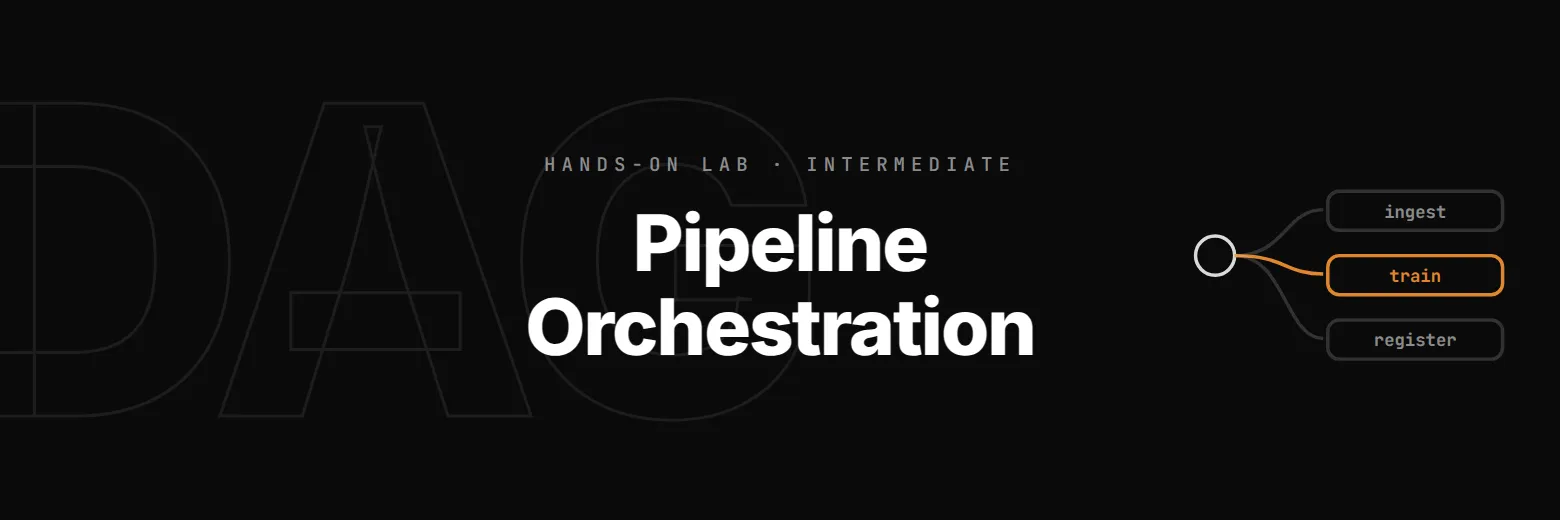
UnlockTraining Pipeline Orchestration: Ordering, Retries, Failure Isolation and Resume
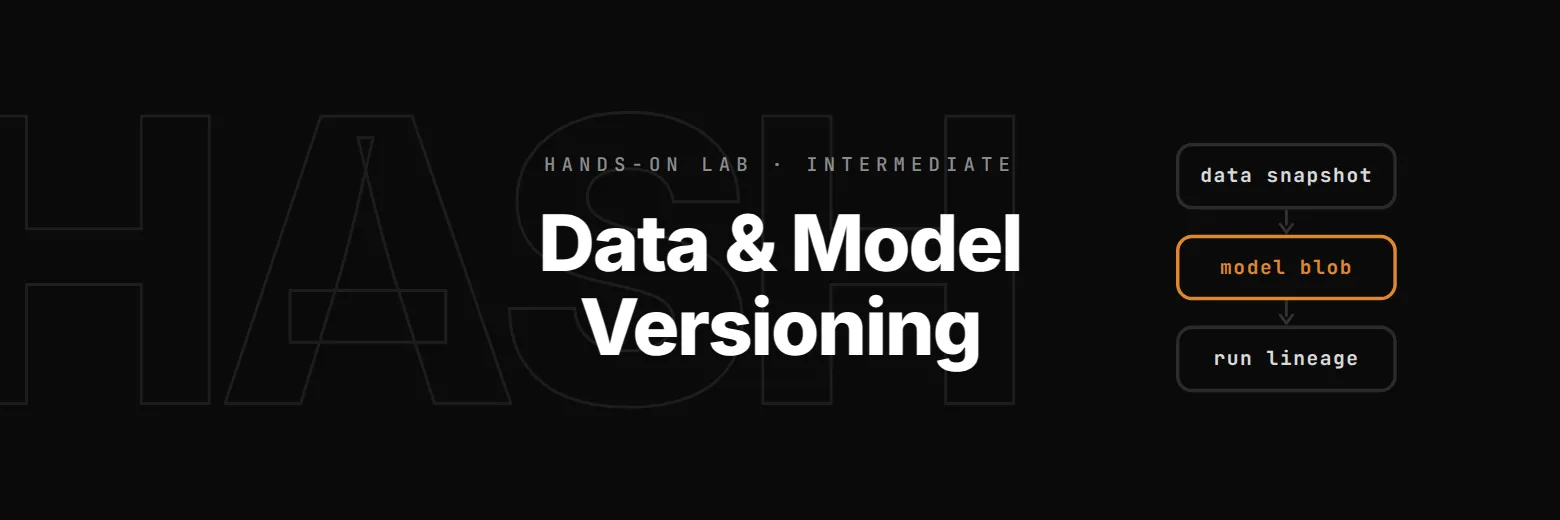
UnlockData and Model Versioning: Content Addressing, Lineage and Garbage Collection
UnlockCI for Models: Data Contracts, Behavioral Tests, Golden Sets and a Merge Gate
UnlockFeature Store Basics: Point-in-Time Correctness and Training-Serving Skew
UnlockReady to start preparing?
Unlock every resource above with one purchase. Lifetime access, 30-day refund.
¿Por Qué Obtener Esta Certificación?
Habilidades que Validarás
- Preparing data with cuDF and pandas: joins, cleaning, GPU ETL with Dask or Spark, feature engineering, class imbalance and Parquet
- Training and evaluating regression, classification and clustering models with cuML and XGBoost, with cross-validation and tuning
- Designing reproducible, scalable pipelines with RAPIDS and Dask, including feature selection and overfitting control
- Exploring data with descriptive statistics, visualizations and hypothesis tests
- Explaining GPU acceleration: CPU versus GPU workloads, memory transfers and distributed frameworks
- +3 habilidades más
Beneficios Profesionales
Roles Objetivo
Temas y Dominios del Examen
El examen de certificación evalúa tu conocimiento en 8 áreas clave de competencia:
- Data integration, joining and manipulation with NVIDIA cuDF and pandas
- Data cleaning, quality handling and governance compliance
- GPU-accelerated ETL workflows with RAPIDS, Dask or Spark
- Feature engineering for numerical and categorical variables
- Handling class imbalance and generating synthetic data
- Dimensionality reduction and data sampling
- Efficient processing and storage with Parquet and modern frameworks
- GPU-accelerated model training with NVIDIA cuML and XGBoost
- Regression, classification and clustering techniques
- Model evaluation, comparison and generalization
- Hyperparameter tuning and optimization
- Cross-validation methods
- Performance metrics and confusion matrix interpretation
- End-to-end data science pipeline design
- Feature engineering, selection and transformation
- Mitigating underfitting and overfitting
- Dataset augmentation and integration
- Automation and scalability of data science workflows
- Reproducible pipelines with RAPIDS and Dask
- Exploratory data analysis and descriptive statistics
- Visualization
- Selecting plots for different analysis goals
- Hypothesis testing and statistical significance
- Patterns, trends and relationships in data
- Python for data analysis: NumPy, pandas and Jupyter
- Core GPU acceleration concepts for data science
- CPU versus GPU workloads and memory transfer optimization
- End-to-end workflow: ingest, ETL, clean and transform
- Distributed versus GPU-accelerated computing frameworks
- Model parameters, tuning, and overfitting versus underfitting
- Monitoring and optimizing ML pipelines for performance and reliability
- Experiment tracking with MLflow, Weights & Biases and custom tools
- Saving and loading models and generating predictions
- Monitoring production models for drift and performance degradation
- Managing model artifacts and configurations for reproducibility
- Benchmarking workflows and selecting hardware
- Time series handling, splitting and forecast evaluation
- Missing or irregular timestamps and cuDF interpolation
- CPU versus GPU performance for temporal analytics
- Graph-based data representation and analysis
- Node importance and network visualization
- Maintaining environment files for reproducibility
- Reproducible Python environments with Conda, pip or Docker
- Managing dependencies in multi-user environments
- GPU environment checks: driver, CUDA and RAPIDS compatibility, nvidia-smi and device visibility
- Version control basics with Git
Tecnologías y Herramientas Cubiertas
Lo Que Podrás Hacer
Después de obtener esta certificación, podrás:
- Join, clean and transform large datasets on the GPU with cuDF, Dask or Spark, and store them efficiently in Parquet
- Train, tune and validate cuML and XGBoost models with the right cross-validation and metrics
- Design pipelines that avoid leakage, scale across GPUs and give reproducible results
- Explore data with descriptive statistics, plots and hypothesis tests, and choose the right chart for a question
- Decide which workloads benefit from GPUs and keep data transfers between CPU and GPU low
- Track experiments, save and serve models, and monitor them for drift
- Work with time series and graphs: time-aware splits, irregular timestamps, centrality and layouts
- Set up reproducible Conda, pip and Docker environments, check GPU drivers and CUDA versions, and use Git
Why This Certification Matters
Habilidades que Validarás
- Preparing data with cuDF and pandas: joins, cleaning, GPU ETL with Dask or Spark, feature engineering, class imbalance and Parquet
- Training and evaluating regression, classification and clustering models with cuML and XGBoost, with cross-validation and tuning
- Designing reproducible, scalable pipelines with RAPIDS and Dask, including feature selection and overfitting control
- Exploring data with descriptive statistics, visualizations and hypothesis tests
- Explaining GPU acceleration: CPU versus GPU workloads, memory transfers and distributed frameworks
- Tracking experiments with MLflow and Weights & Biases, saving models, and monitoring drift and performance
- +2 habilidades más
Beneficios Profesionales
Roles Objetivo
Industrias que Están Contratando Activamente
Preguntas Frecuentes
NCA-ADS (NVIDIA-Certified Associate: Accelerated Data Science) is an entry-level NVIDIA certification that validates proficiency with GPU-accelerated tools and libraries for data science workflows, such as RAPIDS cuDF, cuML and Dask. NVIDIA recommends 1 to 2 years of experience in accelerated data science.
NVIDIA lists 50 to 60 questions in 60 minutes, taken online with remote proctoring through a Certiverse account. The exam is in English, and NVIDIA does not publish the passing score.
The exam costs $125 per attempt. The certification is valid for two years from issuance, and you recertify by retaking the exam. Passing earns a digital badge and an optional certificate.
Eight sections: Data Manipulation and Preparation (23%), Machine Learning With NVIDIA RAPIDS (16%), Data Science Pipelines and Workflow Automation (13%), Descriptive Analysis and Visualization (13%), Foundations of Accelerated Data Science (12%), Introductory MLOps Practices (10%), Advanced Data Structures (7%) and Software and Environment Management (6%).
NCA-ADS is NVIDIA's associate (entry-level) data science exam and asks for 1 to 2 years of experience. NCP-ADS (NVIDIA-Certified Professional: Accelerated Data Science) is the professional-level exam and asks for 2 to 3 years of hands-on experience. Preporato has practice exams for both.
Six timed practice exams of 60 questions each, 360 in total, with each exam weighted like NVIDIA's eight sections. Every option has an explanation, and every question links to the documentation behind it, from RAPIDS and XGBoost to scikit-learn, pandas, Dask and MLflow. Each exam also includes six Select TWO questions for extra depth. The first five questions of each exam are free to try.
NVIDIA's learning path lists three self-paced courses: Accelerating End-to-End Data Science Workflows, Best Practices in Feature Engineering for Tabular Data with GPU Acceleration, and Accelerated Machine Learning for Time Series Forecasting, plus a study guide. Then take timed practice exams, review every explanation, run the workflows yourself in hands-on labs, and book the exam once you score 80% or more on several practice exams.
Yes. Preporato Pro includes hands-on labs for skills in NVIDIA's NCA-ADS topic list: data cleaning and feature engineering, class imbalance, PCA and clustering; a RAPIDS pipeline with cuDF and cuML on a GPU; scikit-learn and XGBoost models with cross-validation, metrics and decision thresholds; time series backtesting; MLflow tracking, drift monitoring, versioning and model serving; GPU profiling and monitoring; and Docker and Git. They run in the browser with nothing to install, the GPU labs on NVIDIA GPU pods, and every step is checked automatically. Descriptive statistics, visualization and graph analytics have no lab yet.
Ready to Pass Your Certification?
Get the practice tests on their own, or go Pro to add 25 hands-on labs for this cert plus every other track on Preporato.
Just Practice Tests
Lifetime access: pay once, study forever
Plus tax where applicable
- 6 full-length practice tests
- 360+ exam-style questions
- Detailed explanations for every answer
- Exam mode & learning mode
- ×No hands-on labs
Preporato Pro
Billed monthly, cancel anytime
Plus tax where applicable
- 25 hands-on labs for NCA-ADS + 153 more AI/ML labs
- All practice tests across every certification
- GPU sandboxes and hosted environments
- Flashcards, study guides and articles
- Cancel anytime, no contract
Preporato is an independent exam-prep provider with no affiliation to NVIDIA. Certification names and logos belong to their owners.